
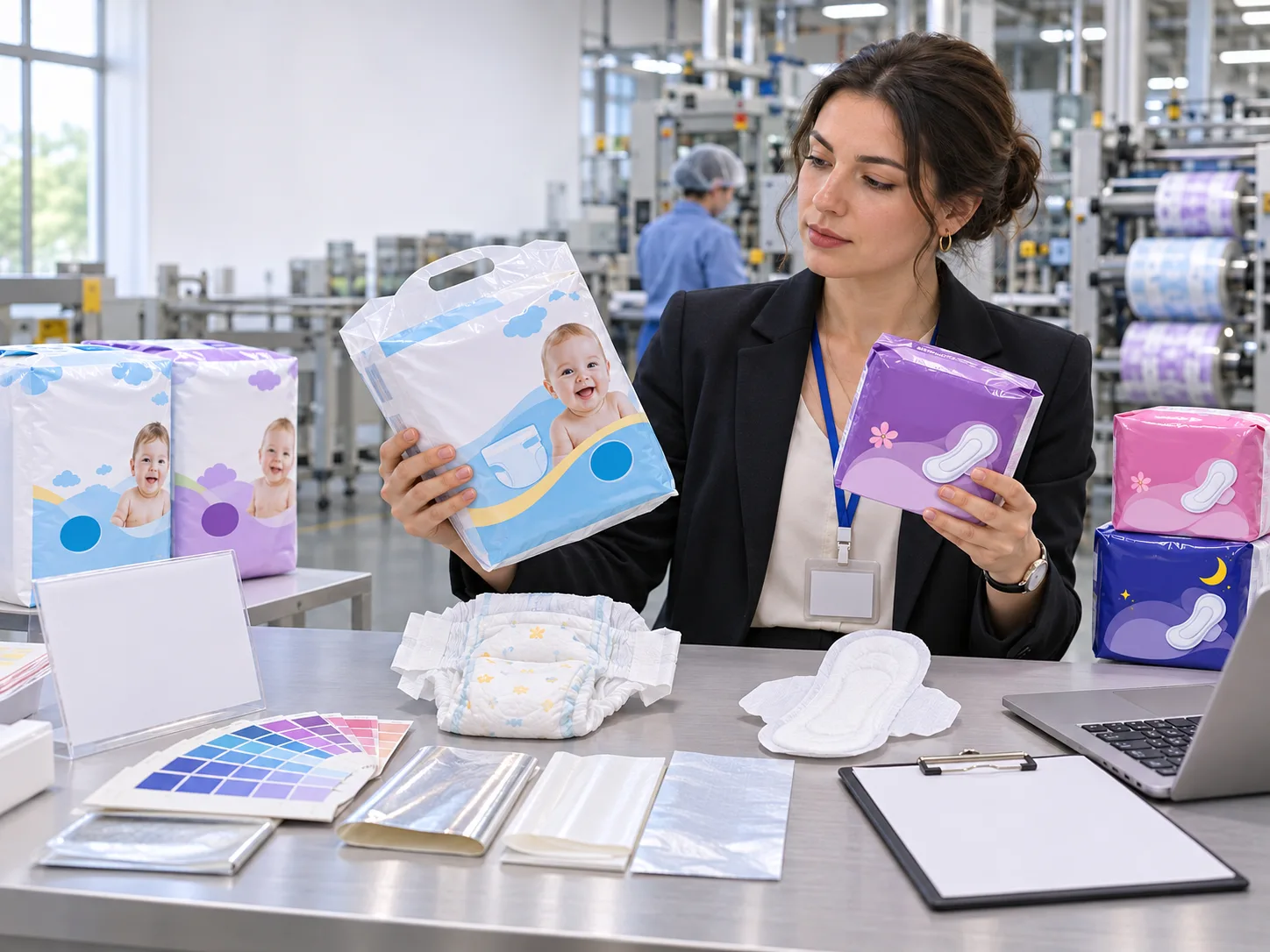
A diaper pack that splits at the handle. A wipes pack that dries out before it is finished. A bag that jams the packing machine at full speed. Each of these costs a hygiene brand far more than the packaging itself. Yet most online packaging guides are written for food or cosmetics, so they focus on oxygen, shelf life, and glass jars.
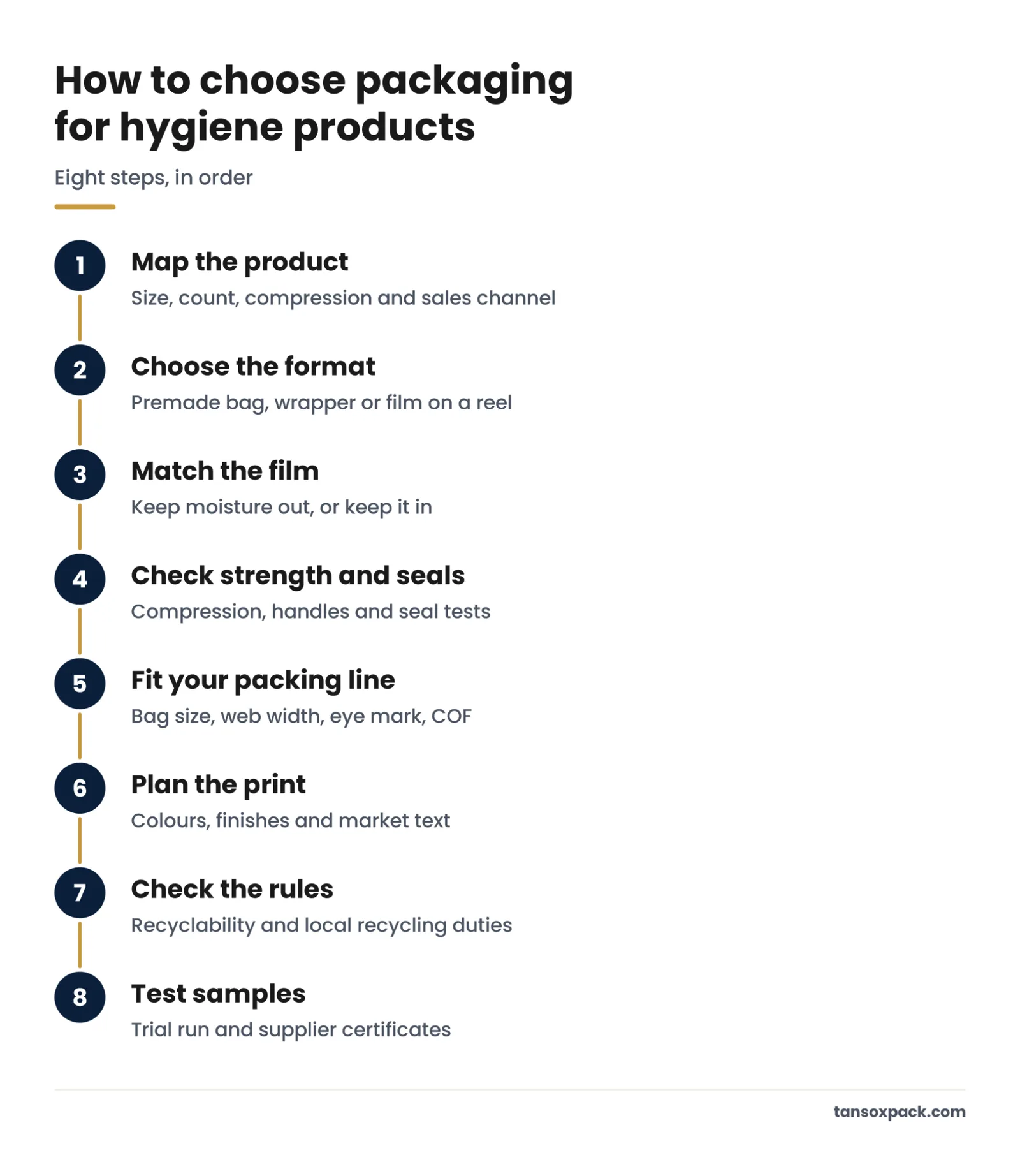
This guide explains how to choose packaging for hygiene products in eight practical steps: product, format, film, strength, packing line, print, rules and samples. It covers the absorbent hygiene products that the European Nonwovens Association EDANA groups together: menstrual products, baby diapers and incontinence products, plus wet wipes, face masks and other disposables.
The steps follow the questions hygiene manufacturers ask us before they place an order. Tansox has made flexible packaging in Quanzhou, China, since 1976, and our customers are hygiene product makers.
How to choose packaging for hygiene products: the 8 steps
Work through the steps in order. Each answer narrows the choices in the next step.
- Map the product, pack count and sales channel.
- Choose the pack format.
- Match the film to what the product needs.
- Check strength, thickness and seals.
- Confirm the packaging fits your packing line.
- Plan the print and finish.
- Check recyclability and the rules where you sell.
- Test samples and check the supplier.
Why hygiene packaging is not food packaging
Food packaging guides focus on oxygen barrier, shelf life and food contact rules. A pack of diapers or sanitary pads has a different set of jobs:
- Keep moisture and dust out, or keep moisture in for wet wipes.
- Hold a squeezed, bulky product without splitting at the corners or the handle.
- Run at speed on bagging, flow wrap or form fill seal machines.
- Look clean on the shelf, because shoppers judge a hygiene product by its pack.
If you copy a food spec, you can end up paying for barrier layers your product does not need, while missing the strength or machine fit it does need. That is why learning how to choose packaging for hygiene products starts with the product and the packing line, not with a material list.
Step 1: Map the product, pack count and sales channel
Start with the product, not the bag. Write down the size of each piece, how many pieces go in one pack, the pack weight, and whether the product is folded, stacked or compressed. Diapers and underpads are often squeezed hard to save space, so the bag has to fit the compressed stack, not the loose product.
Then list where each pack will be sold:
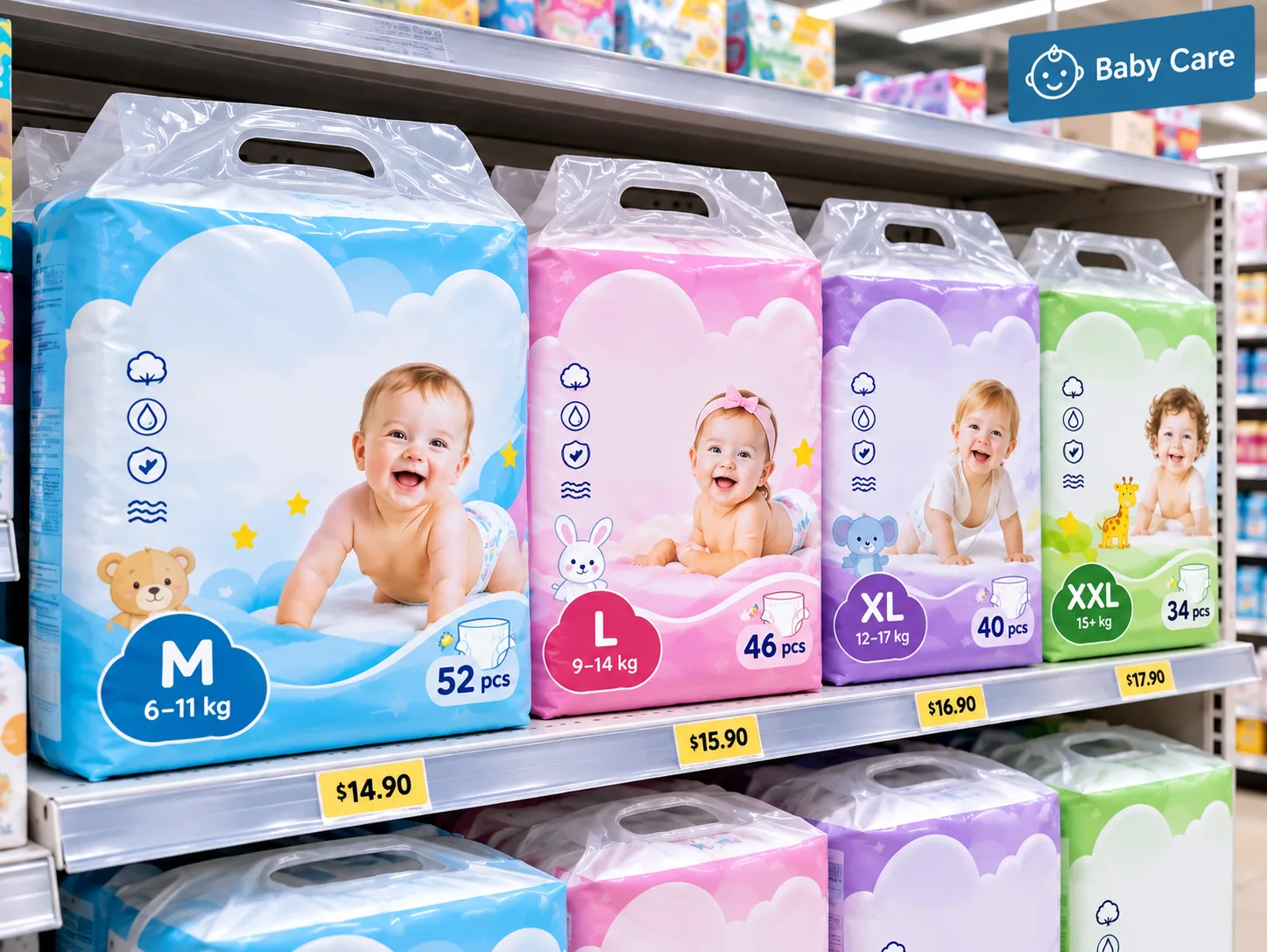
- Supermarkets and pharmacies need strong shelf appeal, a clear piece count and a carry handle on large packs.
- Hospitals and care homes often buy plain bulk packs, where strength and clear labelling matter more than graphics.
- Online sellers need packs that survive parcel handling without tearing.
- Export markets may need different languages, sizes or pack counts.
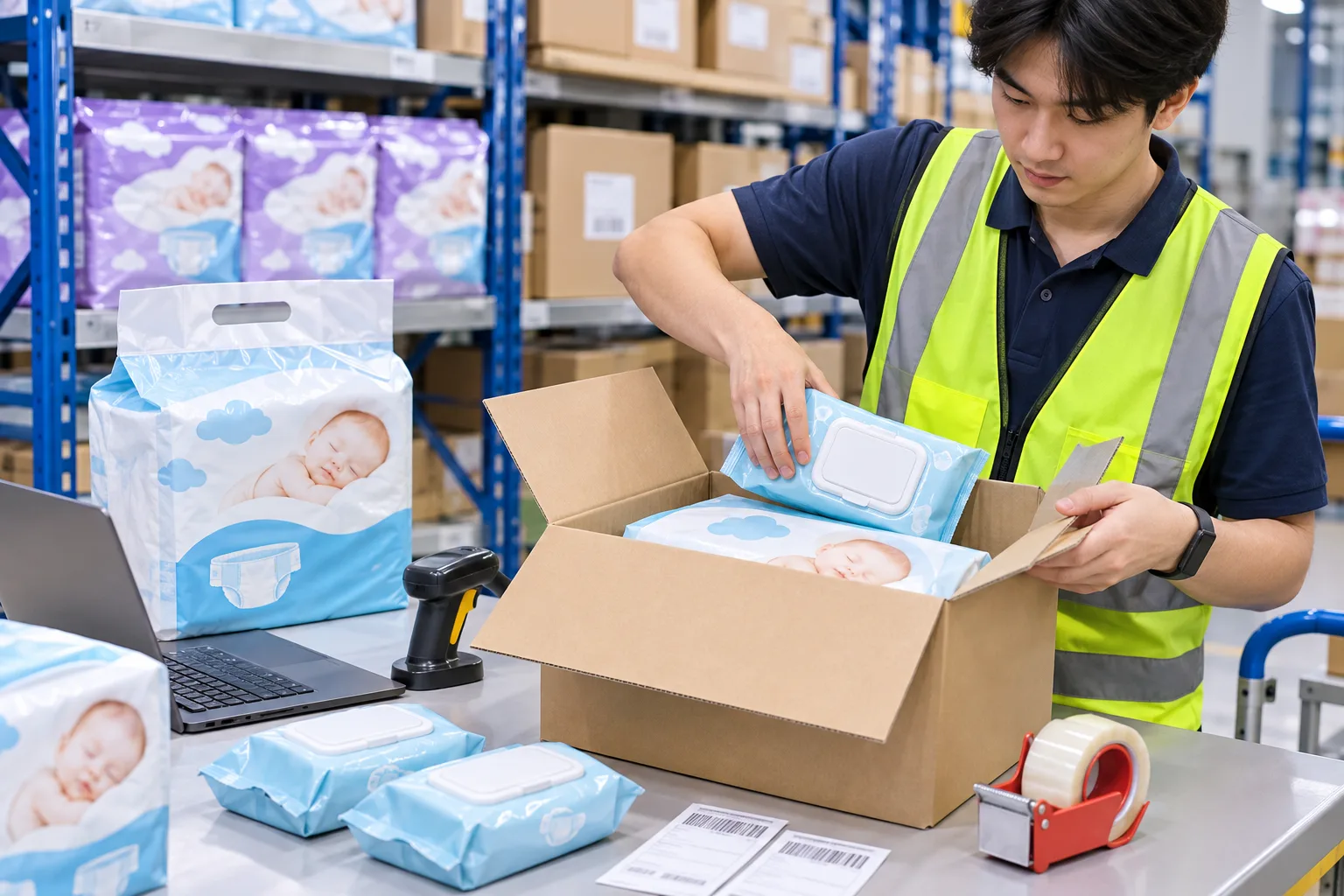
The same product can need two or three different packs. A baby diaper sold in a supermarket and the same diaper sold to a clinic rarely share one bag. Agree on this list before you ask for prices, because every new size or design adds print cylinders and stock.
Step 2: Choose the pack format
The format is the shape and construction of the pack. For hygiene products, the choice is usually between premade bags, thin wrappers for single pieces, and printed film on a reel that your own machine turns into packs.
| Product | Common pack formats | What to check |
|---|---|---|
| Baby diapers, adult diapers, pull up pants | Euro bottom bag with a handle strip, side gusset bag with a die cut handle, film on a reel for automatic bagging | Strength under compression, handle comfort, fit on your bagger |
| Sanitary pads and maternity pads | Thin film wrappers for single pads, side gusset outer bags | The wrapper opens easily, the outer pack shows the count clearly |
| Wet wipes | Soft packs with a resealable label or plastic lid, flow wrapped packs | Moisture barrier and a reseal that keeps working |
| Underpads and bed pads | Side gusset or flat PE bags | Strength, size and a clean opening |
| Face masks and disposables | Flow wrapped single packs, zipper or gusseted multipacks | Clean seals and easy opening |
Large diaper packs often use euro bottom bags with a handle strip across the top. The base folds into a flat, box shape, so packs stand neatly on a shelf. Side gusset bags expand at the sides. They suit brick shaped packs of pads, soft towels and wipes, and diaper packs with a die cut handle.
Wet wipes need a pack that closes again after every use, so most brands choose resealable wet wipes bags with a label or a plastic lid. Single pads, trial packs and single masks often go into individual sachets and sample packs, or into a thin wrapper made on the production line.
If you run a high volume line, you may not need premade bags at all. Many brands buy printed film on a reel and form the pack on their own machine. Step 5 covers that choice.
Step 3: Match the film to what the product needs
Ask one question first: does the product need moisture kept out, or kept in?
Diapers, pads, underpads and masks are dry products. Their pack must keep damp air, dust and dirt away from the absorbent core, which matters in hot, humid warehouses. Polyethylene (PE) film does this job well. It is strong, it stretches without tearing and it seals easily. Many diaper and pad bags use a single layer of PE, or two PE layers bonded together (PE/PE) for extra strength or to seal the print inside.
Wet wipes work the other way round. The pack must stop liquid escaping, or the top wipes dry out. Wipes packs usually use two films laminated together, such as PET/PE or BOPP/PE, where the outer film carries the print and the inner PE layer seals. The reseal label or lid matters as much as the film, because every opening lets moisture out.
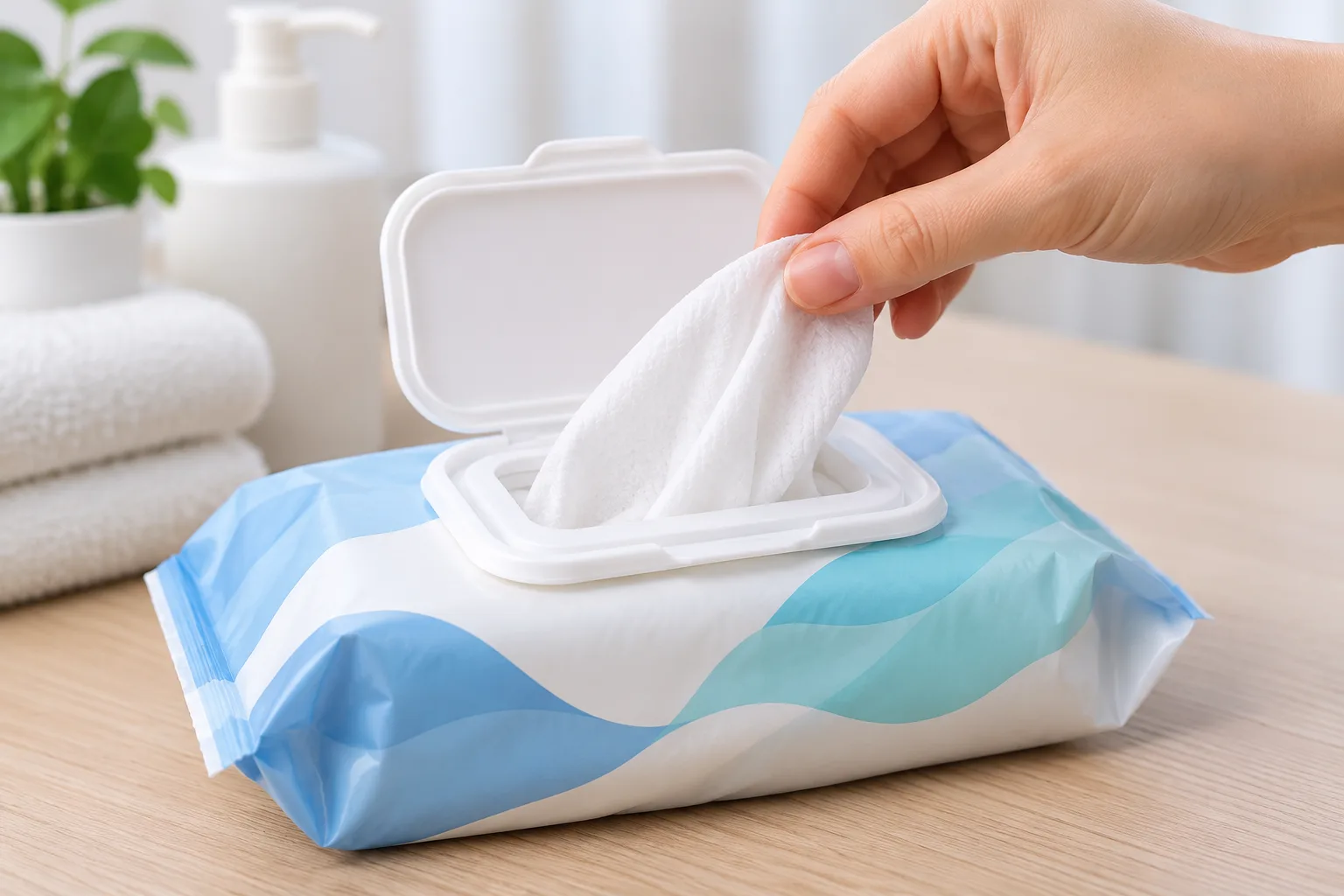
| What the product needs | Common film choice | Typical products |
|---|---|---|
| Keep damp air and dust out | Single layer PE or PE/PE | Diapers, pull up pants, pads, underpads |
| Keep liquid in | PET/PE or BOPP/PE laminate with a reseal | Wet wipes |
| A premium look and feel | Matte, soft touch or metallic laminates | Premium diaper and pad ranges |
| Easier recycling | Mono material PE | Brands with recycling targets |
For cleanroom and medical items, also ask how the film is made, handled and packed so it stays clean. If a product must stay sterile, the pack becomes part of a sterile barrier system with its own standards and validation. Treat that as a separate project with your regulatory team.
Whatever you choose, ask the supplier to write the structure layer by layer, with the thickness of each layer. You can compare common packaging film structures on our film page.
Step 4: Check strength, thickness and seals
Hygiene packs take a lot of punishment. Diapers are squeezed into the bag on the packing line. Then the pack is carried by its handle, stacked in hot containers and dropped into shopping trolleys. The weak points are almost always the corners, the gussets, the handle and the seals.
Thickness is measured in microns. A thicker film is not always the answer, because the resin blend and the way the film is made also decide how strong it is. Ask the supplier to recommend a thickness for your pack weight and compression, then confirm it with a trial.
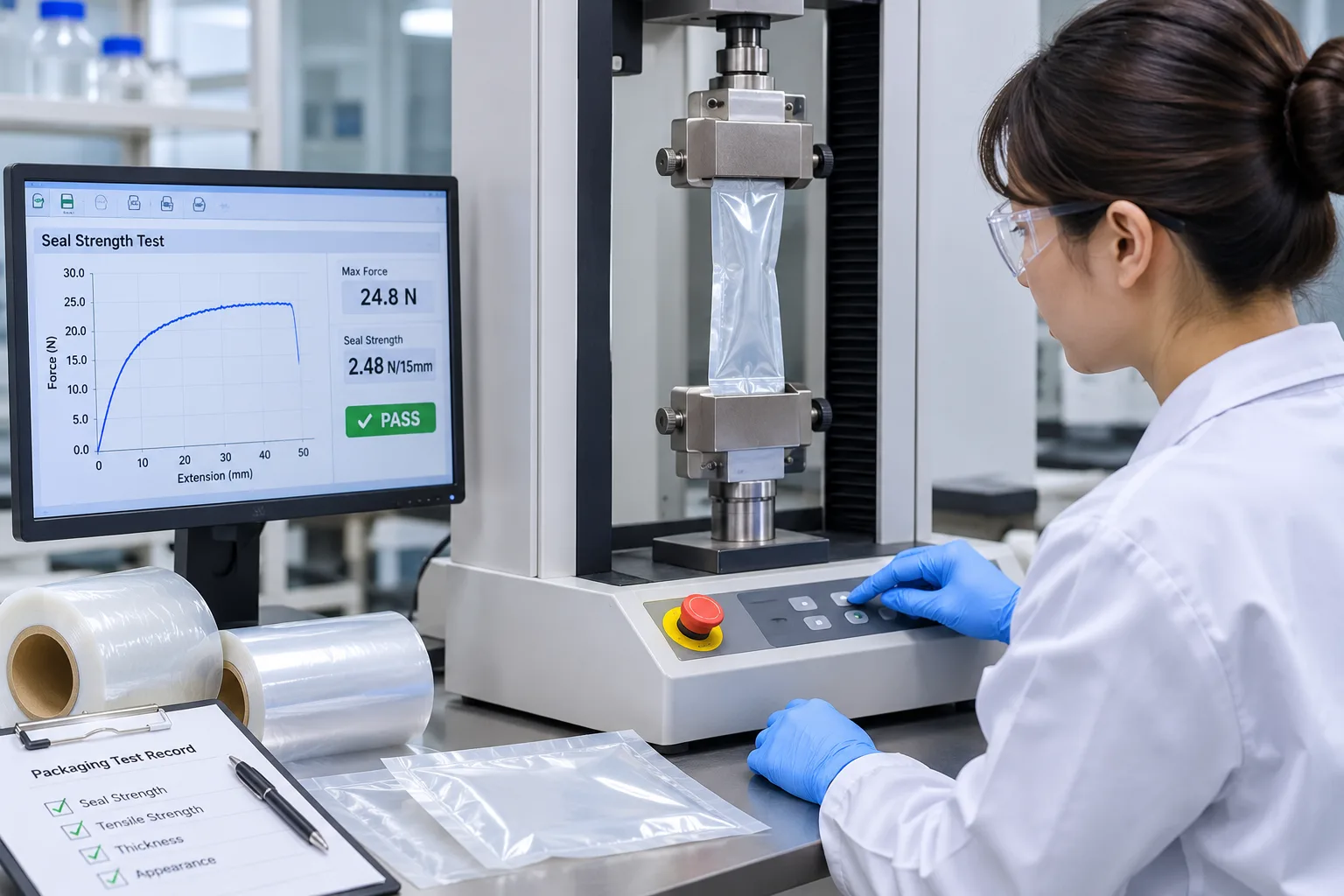
Seal strength is where many problems start. ASTM F88 is a common test method that measures the force needed to pull apart a strip of material containing a seal. The standard notes that a minimum seal strength helps keep a pack closed, while an upper limit matters for packs that people peel open. Both apply to hygiene products:
- Diaper and underpad bags need seals strong enough to hold a compressed product.
- Single pad wrappers must stay closed in a handbag, yet open easily with one hand.
- Wipes reseal labels must keep sticking after many openings.
Put the test method and the minimum values in your specification, not just the words "strong seal". Ask for a drop test of full cartons too, because transport damage often shows up only at the destination.
Step 5: Confirm the packaging fits your packing line
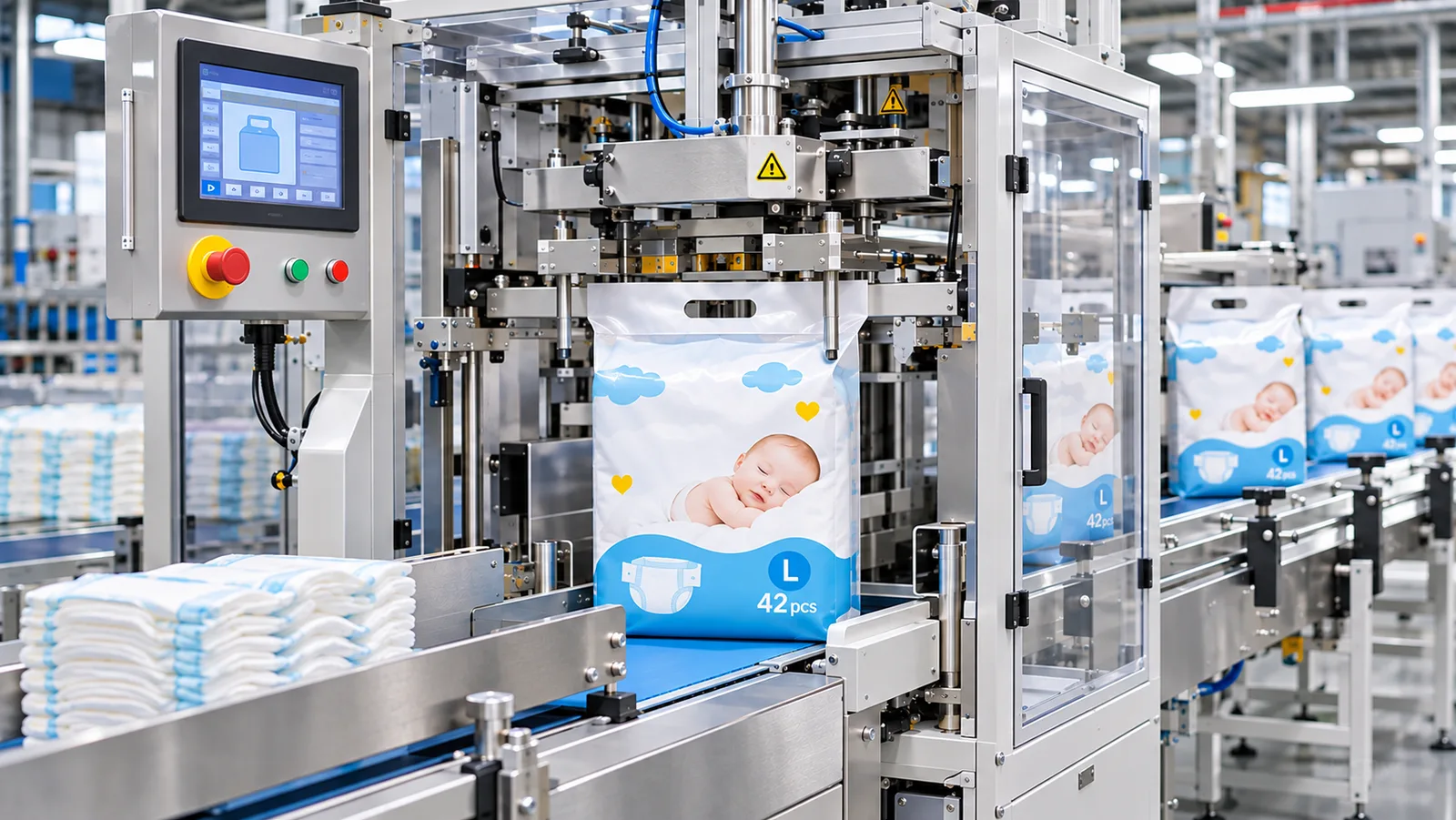
The best bag on paper is useless if it jams your machine. Before you approve a design, check what your packing line can run.
Premade bags or film on a reel. Premade bags need less money up front and change size faster. Film on a reel costs less per pack once volumes are high, but it needs a form fill seal machine and trained staff. Our rollstock vs pouch cost guide works through the break even sum.
If you use premade bags, give the supplier the bag mouth size, gusset depth, handle position and the way bags are fed into your machine. A few millimetres of difference can stop a bagger.
If you use film on a reel, the supplier needs your web width, core size, maximum reel diameter, unwind direction and eye mark position. Film slip, measured as the coefficient of friction (COF), also matters, because film that is too slippery or too sticky will not track straight at speed. Tansox makes printed rollstock in web widths up to 1,750 mm.
Always book a trial run on your own machine, at full speed, before the first large order. It is the cheapest way to find problems.
Step 6: Plan the print and finish
Your pack is the first thing a shopper sees, so print quality matters. Most hygiene brands choose between two printing methods:
- Gravure printing uses one engraved cylinder per colour. It costs more to set up, but it holds fine detail and steady colour over long runs. Tansox gravure presses print up to 12 colours.
- Flexographic printing uses lower cost plates and suits simpler designs and shorter runs.
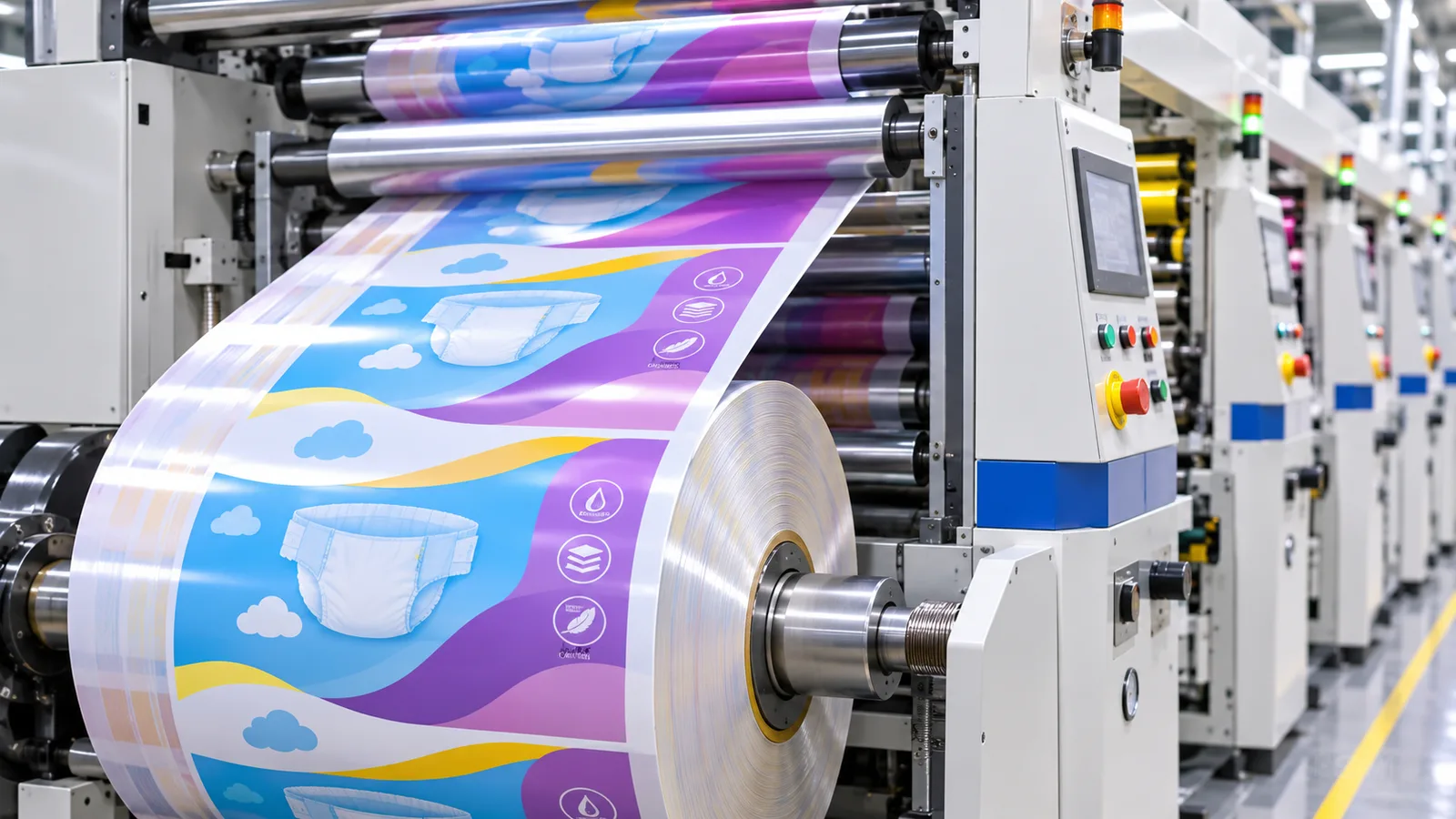
If several sizes share one design, ask whether the size and count text can sit in a single colour. Then only one cylinder changes between sizes, which keeps setup costs down. This cost guide explains how cylinders, quantity and structure affect your price.
Premium ranges often add a matte or soft touch surface, or finishes such as gold sand, 3D emboss and hot stamping. These help a pack stand out, but test that they do not change how the film seals or runs on your machine.
Finally, plan the text before you approve artwork. Check the languages, barcodes, piece count, size chart, batch code space and recycling marks that each market needs. For baby products in particular, ask how the supplier checks ink odour and leftover solvent in the printed film.
Step 7: Check recyclability and the rules where you sell
Packaging rules are changing fast, and many of them apply to the brand that sells the product, not only to the packaging maker.
Design for recycling. A pack made from one material family is easier to recycle than a pack that mixes PET, aluminium and PE. Many hygiene packs can be made in mono material PE, which is designed for recycling where PE film is collected.
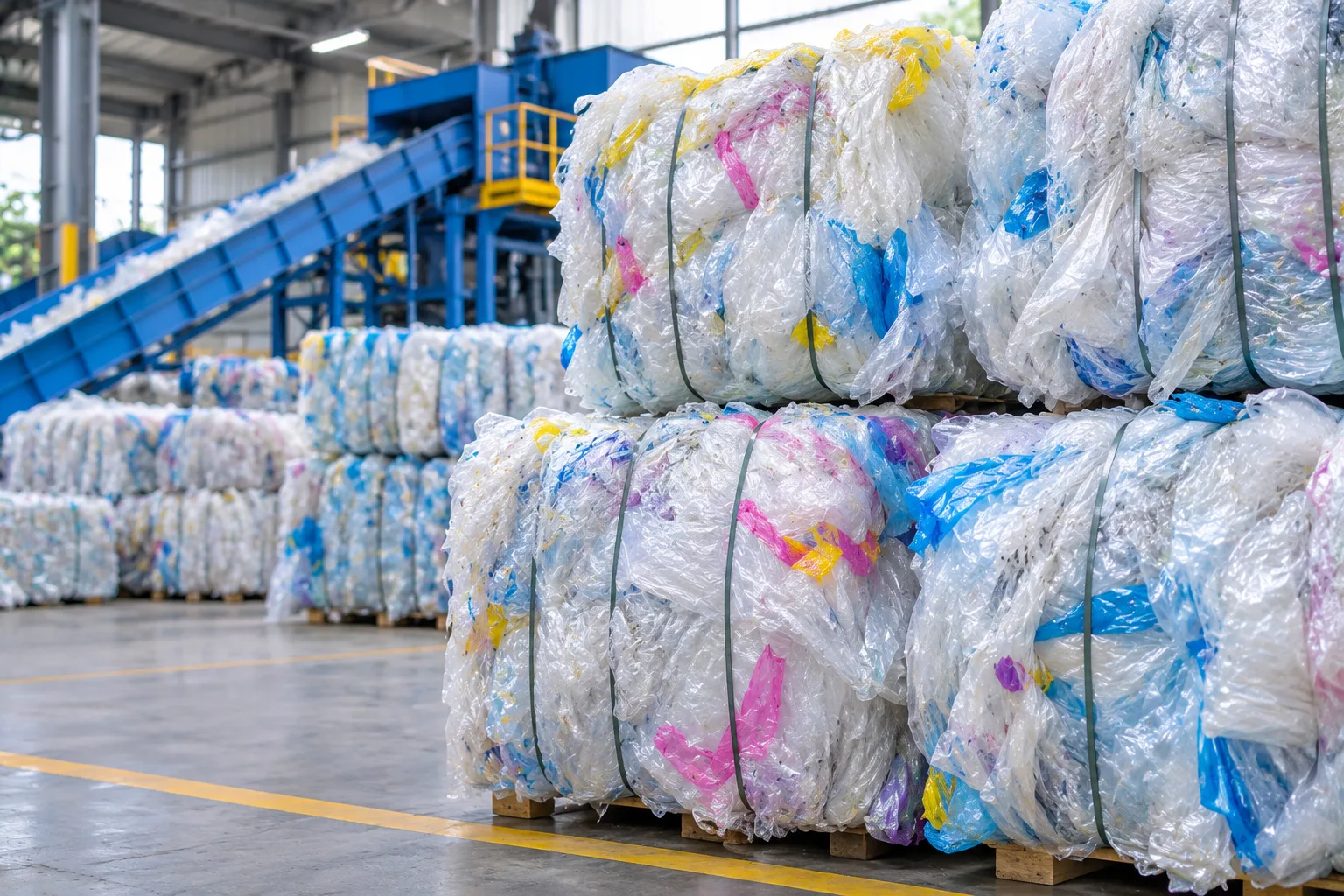
Europe. The EU Packaging and Packaging Waste Regulation has applied since 12 August 2026. A harmonised packaging label follows from 2028. From 2030, all packaging must be recyclable, plastic packaging must contain recycled plastic, and new limits on empty space apply.
Vietnam. Producers and importers carry recycling duties for listed products and packaging. A new decree in force since 25 May 2026 lists the products and packaging covered, sets recycling rates, and asks companies to register a recycling plan or declare a contribution by 1 April each year.
Other markets. Rules differ from country to country, so check the current position in each market with a local adviser before you fix a structure.
Tell us which regulations apply to your market at the quote stage and we'll confirm what material documentation we can provide.
Step 8: Test samples and check the supplier
Samples turn a specification into something you can hold, fill and test:
- Plain samples check the size, gussets and handle position against your product.
- Printed preproduction samples check colour, text and finish against your approved artwork.
- A trial run checks how the film or bags behave on your machine at full speed.
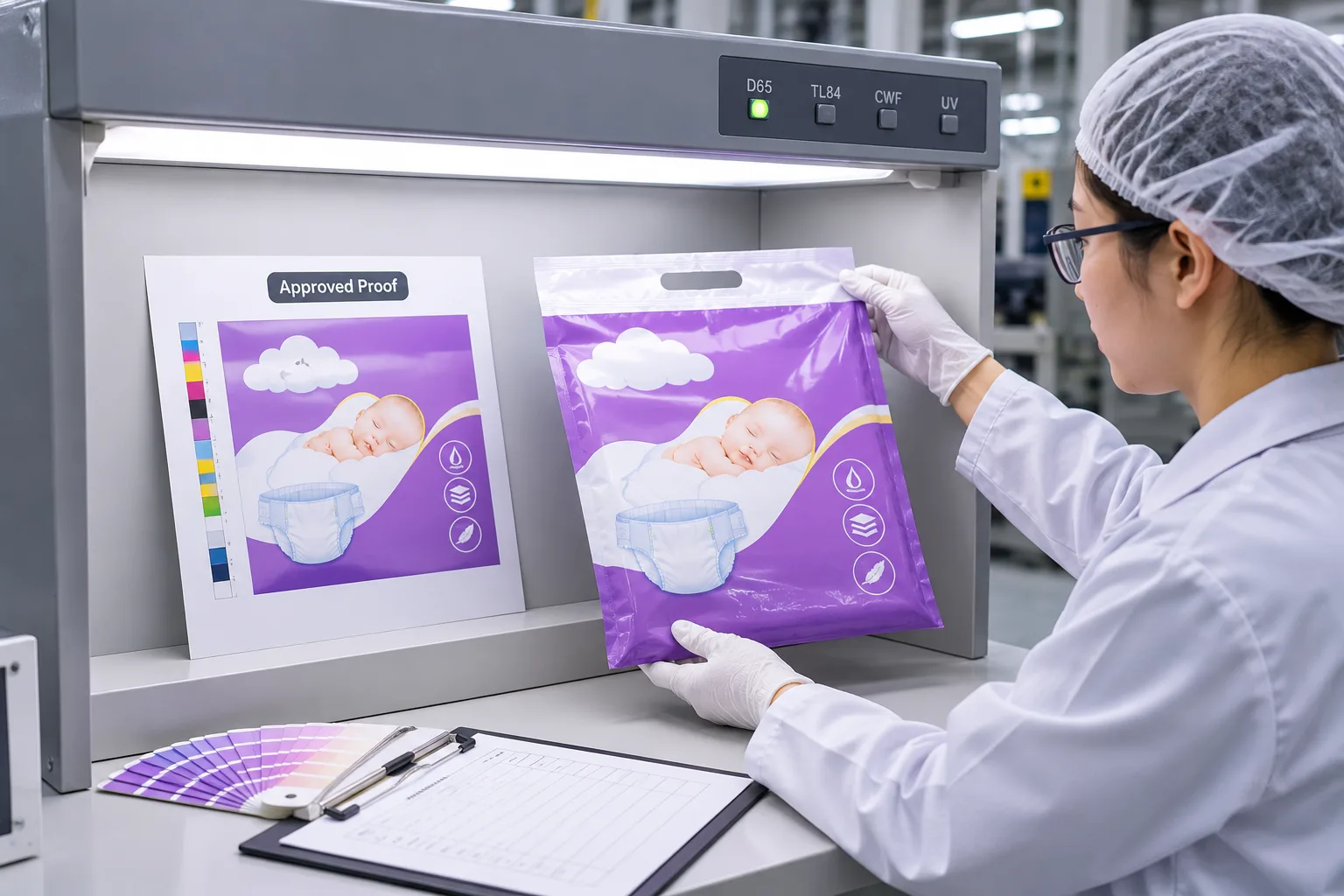
At the same time, check the supplier itself. Ask for copies of its management system certificates, and read the company name, certificate number, scope and expiry date. ISO does not issue certificates itself, so confirm a certificate with the body that issued it or through the accreditation database.
Tansox holds ISO 9001:2015 for quality management and ISO 14001:2015 for environmental management, both issued by the certification body EACC. You can find the details on our quality and certification page.
Ask what the supplier makes in house. A factory that blows its own film, prints, laminates and converts bags can control quality at each stage. Our Quanzhou factory runs 3 blown film lines, 8 high speed printing presses, 4 laminating machines and 80 bag making machines. Also ask whether each production lot ships with a certificate of analysis (COA), and how the supplier handles complaints.
Minimum order and lead time depend on the product, the bag size, the structure and the number of designs, so get both confirmed in writing in the quote.
Common mistakes to avoid
- Comparing only the price per bag. A cheaper bag that splits or jams the line costs more in lost output than it saves.
- Copying a food packaging spec. Hygiene packs rarely need a high oxygen barrier, but they do need strength, clean seals and machine fit.
- Changing the pack size without checking the bagger. Even a small change in count or fold can need new bag dimensions.
- Approving artwork before the size and structure are fixed. Late changes can mean new cylinders.
- Skipping a storage test in your own climate. Leave filled sample packs in your warehouse for a few weeks, then check them for splits, seal failures and, for wipes, weight loss.
What to send your supplier for a quote
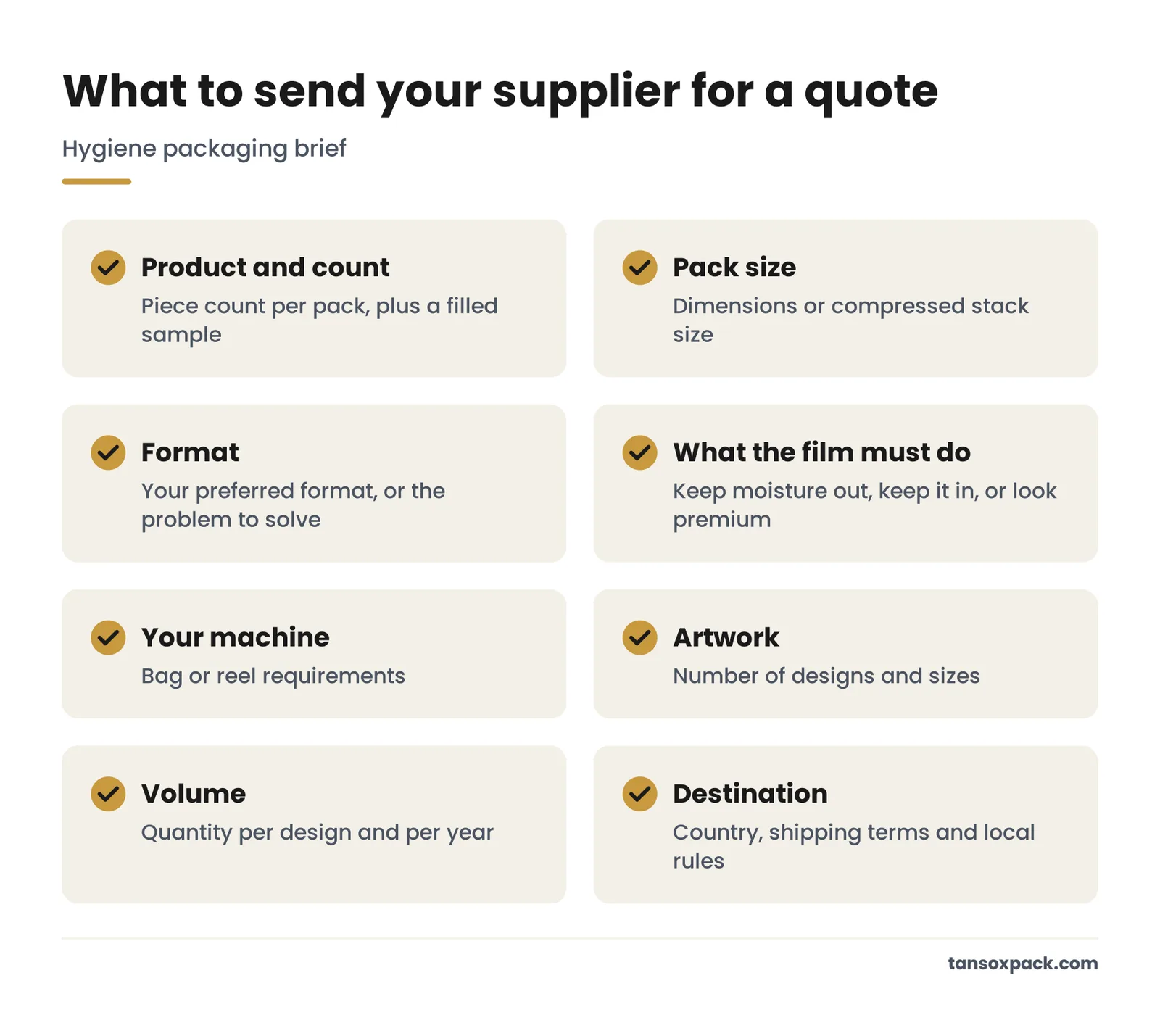
A complete brief gets you a faster, more accurate quote. Send:
- The product, the piece count per pack, and a filled sample or photos.
- The pack dimensions, or the size of the compressed stack.
- The format you prefer, or the problem you want to solve.
- What the film must do: keep moisture out, keep it in, or carry a premium finish.
- Your machine type and its bag or reel requirements.
- Your artwork, plus the number of designs and sizes.
- The quantity per design and your expected yearly volume.
- The destination country and shipping terms, such as FOB Xiamen, FOB Quanzhou or EXW.
- Any regulations or documents your market requires.
Frequently asked questions
What is the best packaging for diapers?
Most diaper brands use printed PE bags, either euro bottom bags with a handle strip or side gusset bags with a die cut handle, filled on a compression bagger. The best choice is the one that survives compression, carries comfortably and runs on your machine. See how we pack baby diapers.
What packaging material is used for sanitary pads?
Single pads are usually wrapped in thin printed film on the pad production line. Retail packs commonly use PE outer bags, often in a side gusset format, with matte or soft touch finishes for premium ranges. Here are the formats we make for pads.
How do I keep wet wipes from drying out?
Use a barrier laminate such as PET/PE or BOPP/PE, plus a reseal label or lid that keeps sticking, and test both with your own lotion. A simple check is to weigh closed and opened sample packs every week and track the weight loss. Read how we build packs for wipes.
Is PE packaging for hygiene products recyclable?
Mono material PE is designed for recycling, but whether a pack is actually recycled depends on local collection and sorting. Laminates that mix PET, aluminium and PE are harder to recycle.
What is the minimum order for custom hygiene packaging?
It depends on the product, the bag size, the film structure and the number of designs. Printed film on a reel is usually quoted by weight. Your supplier should confirm the exact minimum in the quote.
Should I buy premade bags or film on a reel?
Premade bags suit many sizes, short runs, and lines without a form fill seal machine. Film on a reel suits long, steady runs at high volume. Run the numbers for each product, because many brands use both.
Choosing hygiene packaging with confidence
Knowing how to choose packaging for hygiene products comes down to eight checks: know the product and where it sells, pick the format, match the film, test strength and seals, confirm machine fit, plan the print, check the rules and test samples. Get those right, and the pack protects the product, runs at speed and sells on the shelf.
If you are planning a new pack or reviewing an old one, send us your product, pack size, machine details and target markets, and we will recommend a format and film structure for each item. You can also browse all the hygiene markets we supply. Tap WhatsApp Us or Get a Quote to start.